
8 Reasons to Implement an MFT Strategy

8 Reasons to Implement an MFT Strategy

MFT strategy

Today’s businesses need to adhere to various security standards (e.g., PCI DSS, HIPAA, the GDPR) not only to prevent the high costs associated with data breaches but also to avoid hefty penalties.

However, ensuring the security of data transferred among employees, partners, vendors, and customers is becoming increasingly challenging due to the large amount of data that organizations need to handle and protect. One wrong step, such as lack of file encryption in just one workflow, could cost you dearly.

Thankfully, you can enhance the safety of your file transfer processes by using proven technologies, such as managed file transfer (MFT) software, without straining your IT resources or interrupting current business processes.

What’s Managed File Transfer (MFT)?

MFT solutions are designed to help organizations reduce the complexity of and costs associated with file transfer. They help improve cybersecurity by replacing vulnerable legacy file transfer protocols, such as FTP.

An MFT software solution is an all-in-one technology that automates and encrypts file transfers.

The administrator of the file transfer can access the program via a centralized dashboard from anywhere and perform tasks needed. The tasks can include:

  • Sending encrypted files.
  • Receiving and decrypting sensitive documents.
  • Scheduling batch file transfers.
  • Sharing information with partners via external servers or cloud-computing platforms.
  • Reviewing audit logs.
  • Generating audit reports for compliance.

Using an MFT solution, you can automate workflows, increase efficiency, minimize manual file transfer, and reduce the need for custom scripting.

8 Reasons for Implementing an MFT Strategy

There are many reasons why organizations should implement an MFT strategy to improve the safety and efficiency of their file transfer processes:

1. MFT Helps Ensure Compliance with Data Security Regulations.

An MFT software offers a high level of security to protect critical data, such as personally identifiable information (PII) in healthcare or credit card payment information in banking.

It helps you effectively eliminate many vulnerabilities from your business communication processes. This will help you not only prevent costly data breaches but also avoid fines associated with the violation of stringent industry regulations.

Most MFT solutions are compliant with common requirements (e.g. PCI DSS, HIPAA, HITECH, and the GDPR.) You can use various features, such as auditing, reporting, role-based access, centralized security controls, key management, encryption, and secure protocols to protect sensitive information.

2. MFT Provides an Audit Log for Your File Transfer Activities.

There are many situations in which you need to audit your file transfers. For example, a business partner requests an overview of the month’s transfer activities, you need to troubleshoot a failed file transfer, or you need to launch an investigation for a data breach.

MFT software stores detailed audit records for all file transfer activities and some also offer the capability to search the audit log for specific terms, users, or date ranges. You can get details about the transfer workflows and investigate whether each step succeeded or failed.

3. MFT Enhances Security Without the Hassle.

If you have been using FTP for file transfer, it’s time for an upgrade. FTP is an old technology that doesn’t meet modern security standards and fails to protect files whether they’re sent through private or public networks.

You should also consider upgrading to MFT software if you have been using homegrown solutions, which often have many security gaps and vulnerabilities that can easily be exploited by hackers. Not to mention, their maintenance is often time-consuming and labor-intensive.

With an MFT solution, you don’t have to worry about the risk, maintenance, and programming needed to set up a file transfer protocol. The software is easy to use and you can schedule batch transfers to improve efficiency. Secure data exchange methods such as SFTP, FTPS, and HTTPS help ensure that all the files are properly encrypted.

4. MFT Minimizes the Impact of IT Downtime.

Did you know that system downtime costs organizations an average of $100,000 an hour? While not all downtime is preventable, you can mitigate its impact on your organization by making sure that critical file transfer systems and servers are available to minimize delays.

A robust MFT solution offers active-passive and active-active (i.e. clustering) methods to help keep your processes running even if you encounter other IT issues. For example, clustering ensures the highest availability by running multiple servers concurrently so your communications won’t be disrupted if one server goes down.

5. MFT Helps You Comply with Government Requirements.

If your organization services government agencies, you’re required to follow special reporting and encryption requirements issued by the US National Institute of Standards and Technology (NIST). These requirements are complex so it’s very challenging and inefficient to build a homegrown solution that meets all the criteria.

On the other hand, an MFT solution can fulfill various NIST requirements with FIPS 140-2 compliant AES and Triple DES encryption algorithms, audit logs and reports, secure authentication and user controls, etc. As such, you don’t have to reinvent the wheel when you get a government contract.

6. MFT Facilitates Secure File Exchange in the Cloud.

As more businesses are migrating to cloud computing, you’ll inevitably need to exchange files in the cloud — whether within the organization or among partners, vendors, and customers.

However, it’s often challenging to maintain proper cybersecurity practices in these situations. For example, how can you be certain that it’s safe to store sensitive files on a third-party cloud?

Advanced MTF solutions allow organizations to streamline and automate their cloud file transfers to platforms such as Microsoft Azure and Amazon Web Services with strong encryption, whether the files are at rest or in transit.

7. MFT Streamlines Workflows with Third-party Integrations and Automation.

Some MTF applications also offer integrations with popular cloud-based services such as Box, Salesforce, and Google Drive. This helps promote the movement of data between on-premise environments and a variety of cloud applications.

The automation allows you to streamline workflows, increase efficiency, and minimize errors or bottlenecks caused by manual processes. Meanwhile, you can continue to use the many cloud-based productivity tools and add an extra layer of security without interrupting your current business processes.

8. MFT Reduces Your IT Costs.

Devising your own file transfer solution while keeping up with the many security standards can be very expensive. Not only do you need to create custom scripts and single-function tools but you also have to invest in IT resources for ongoing maintenance and upgrade so the program meets the latest cybersecurity protocols.

An MFT solution eliminates many manual processes and therefore overhead costs associated with IT maintenance. Not to mention, the many automation features also allow you to increase efficiency and cut down on time-consuming manual tasks that can be costly in the long-run.

Conclusion: Improve Security and Cost-efficiency with an MFT Solution

To stay competitive and optimize profits in today’s complex business environment, you can’t afford to overlook the security and cost-efficiency of your data transfer processes.

Using an MFT solution allows you to leverage the latest cybersecurity measures to ensure the safety of your business-critical information.

MFT Guidelines helps you stay compliant with increasingly complex and stringent regulatory guidelines while streamlining the workflows so critical information can flow smoothly among various stakeholders to optimize operational efficiency.

The post 8 Reasons to Implement an MFT Strategy appeared first on ReadWrite.

75 Billion Reasons to Talk About Cybersecurity

75 Billion Reasons to Talk About Cybersecurity

cybersecurity

Recent events have reminded all of us how much we rely on smart connected devices to accomplish daily tasks, get work done, and stay in touch with our families and friends. It’s very likely that many of these experiences will remain as examples for us in the future.

It’s a good time to revisit the topic of cybersecurity. Specifically, we need to look at the current forecasts that say we will have 75 billion devices connected to the Internet of Things by 2025. The sheer numbers are beyond comprehension. We should work together to seek better standards with adequate certification schemes, including harmonized safety and security provisions to be designed directly into those devices before they arrive in markets.

Do the numbers understate the potential growth in the amount and, more importantly, the use of connected devices?

Devices that can sense, think, connect and act will enable a world to do many tasks that are anticipated.  Automation will be making everyday activities “smarter” in ways we can only now imagine. The plethora of devices will not only sense the world, but they also will physically act on the planet. Globally, we should all be safer, and all things more sustainable for individuals and businesses.

Using our devices more often for more things could also make us more vulnerable as we depend on processing and zettabytes of data utilized through increased edge computing (locally, in those devices), along with a growing reliance on the cloud. We must, therefore, step up and assume increased security measures as a core function of these smart devices.

We’ll only realize the full potential of smart, connected devices if we can trust and rely on them to be safe and secure. Here’s what it’ll take:

Shared Standards

Currently, services like payments and eGovernment rely on ecosystems that follow globally accepted and implemented security standards, which are supplemented by strong and continually updated commonly trusted certification schemes.

IoT is still in its early stages where products do not interoperate easily, and such standards and certifications are missing, but we can learn from markets with high-security standards. Another brick in the wall that’s missing is standards that entail the appropriate combination of safety and security. IoT standardization has to learn from Healthcare, Automotive, Industrial, and Critical Infrastructure standards.

The trust in future IoT is to be based on independent, economically acceptable assessments and applicable to any type of IoT vertical. NXP advocates here a certification standard called “Security Evaluation Scheme for IoT Platforms” (SESIP), grounded in the Common Criteria certification scheme for highly secure components but covering the full span of IoT devices from low-end low-resources ones to the powerful edge-computing gateways.

In addition, IoT devices will have unmanaged lifetimes. Absolute security does not exist; this implies that we need standards defining ways to recover some baseline functionality in case a system is compromised: resilience is key, and this is where safety and security meet each other. If some level of control can be regained there, is less incentive for it to be attacked again.

IoT devices will be part of large complex systems; this implies that not only devices but also system security requirements standards are to be defined as well, globally with a focus on local requirements. Mutual recognition of security standards is needed to ensure scalability in the industry.

Last but not least, in addition to security and safety, a third pillar is to be considered: privacy. IoT devices are accumulating huge amounts of personal data that needs to be protected in a secure way.

For all those reasons, governments and industry need to redouble their work to develop and embrace common security standards and certification schemes for this next phase of IoT growth. One such mechanism for this collaboration is the Charter of Trust, which NXP co-founded with Siemens and other leading technology businesses. The Charter serves as a common ground for exploring the needs for shared standards, a way to collaboratively develop them, and a platform from which companies can adopt them.

Anticipatory Development

In our era of rapid and continual change, it’s only smart to anticipate that devices will need to either accommodate multiple security requirements and adopt to new ones as they’re developed and deployed. This challenges businesses to consider how to make devices and entire solutions more addressable and flexible too, and by those changing needs.

For instance, there are currently multiple standards for vehicle-to-infrastructure communications (or “V2X”), which is core to enabling smart cars to function as part of integrated, constantly learning, and real-time networks. Add access to all of the less mission-critical functions and services, such as entertainment content and shopping, and it’s vital that designs for new vehicles take into account the likelihood that multiple standards may apply now, and perhaps change in the near future.

This means designing for multiple standards; think product labels in North America that often include descriptions in English, Spanish and French, so the same products can be marketed on shelves in different countries (and made accessible to different users). It also means focusing on the secure connectivity of those devices, not just their functional safety and security, so that devices can be updated (over-the-air, or “OTA”) when needed.

Again, to stretch the language analogy a bit more, many countries use different algorithms to implement similar methodologies to protect against the same sort of security risks (i.e., attacks can be agnostically identified and ranked by likelihood, frequency, potential impact, etc.). Anticipatory development challenges developers to see these common or shared requirements and address them.

Security by Default

Ultimately, security is not only a functional attribute of a product or network but rather an aspect of the design itself; security is something that is inherent, “built-in” versus “added on.” Security and safety are holistic system properties. A key strategy to address the emergent security challenge of 75 billion connected devices will be to continue to produce them with security by default

One way to do this is to physically insert a small component into a device that provides an identifier key and a secure execution environment. Such hard-wiring of one end is what you could call “a secure handshake” (also known as a “root of trust”) makes it incredibly difficult, if not impossible, to hack or trick the device (unless an evil-doer possessed the proper identifier). It’s not a software overlay.

We possess potent tools to address the emergent cybersecurity challenge ahead of us: Pursuing shared standards, anticipating multiple requirements and changes, and building secure components into devices themselves can, when taken together, empower businesses and ultimately individuals and businesses to benefit from the immense productivity and quality of life advances that continued growth in smart, connected IoT devices will bring.

And we have at least 75 billion reasons to build a safer IoT world.

The post 75 Billion Reasons to Talk About Cybersecurity appeared first on ReadWrite.

Biometrics: What the Future Holds for Identity Verification

Biometrics: What the Future Holds for Identity Verification

biometrics identity verification

Back in the mid-2000s, biometric authentication came into light as the future of digital security. We all thought that fingerprint records and facial recognition were totally new. Ask any officer at your local police station — the tech industry was beginning to discover the potential of integrating these biometric identity proofing measures. Here is what the future holds for identity verification.

Tech developers rejoiced as they found ways to bring biometrics into reality.

No longer were digital fingerprint scans and photo identification checks restricted to the world of sci-fi. Unfortunately, early biometric technologies came with apparent flaws that made users quick to deem them too good to be true.

Can we stop the methods of hackers with a biometric application?

Things have changed. To keep up with the ever-evolving methods of hackers, developers have made biometric applications more sophisticated than ever before. But how well does biometric identity proofing hold up to other security measures?

Do biometrics truly keep users safe from data breaches? Is there a possibility that biometric security could replace passwords, tickets, or even government-issued identification? Let’s take a closer look at what biometrics has to offer, and what it could have in store.

Biometrics of the Past

When biometric security systems started gaining relevance in the tech market, companies all over the globe began to show interest. Businesses, both large and small, depended mainly on passwords to secure their private networks, as many still do today.

However, a weak or compromised password is all it takes to jeopardize a private digital database. Manufacturers swore by their fingerprint scanners and facial recognition software, claiming that their products were significantly better security measures.

Unfortunately for biometric developers, naysayers were determined to find cracks in this digital armor — and they did. Fingerprint scanners were proven easily dupable. Fraudsters only needed a lifted fingerprint to fool scanners into giving access to the system they guarded.

Facial recognition tools weren’t exactly fail-safe, either. Biometric authentication developers often claimed that their systems had fail-safe measures like eye movement tracking in place to distinguish the difference between a real person and a photograph. In 2009, however, security researcher Duc Nguyen was able to use a picture to bypass login for Lenovo, Asus, and Toshiba computers.

Even in recent years, there have been considerable reports of these very same weaknesses in biometric technology.

Yes, there are weaknesses, though this isn’t to suggest that biometric authentication software hasn’t changed. It has, in several ways. Facial tracking has improved, and most authentication algorithms today can differentiate between a live human face and a photograph.

Identification technology used in today’s smartphones is more straightforward than that of most third-party security platforms.

However, it’s still significantly better than any of the applications available ten years ago. Unfortunately, hacking methods have evolved at the same pace, leaving many smartphone users to face the same risk.

X-Lab, a Chinese digital security team, showcased a technique for bypassing biometric security measures on smartphones in 2019. In only 20 minutes, X-Lab researchers were able to use a specially made app, cheap hardware, as well as photographs of the fingerprints left on the phone itself to unlock it successfully.

Deepfake technology has also been a cause for concern for companies that rely on biometric security.

Although these digital masks first proved themselves too primitive of severe implications, deepfakes have become increasingly convincing — enough to trick users and biometric authentication systems alike into believing that they’re genuine.

These recent findings beg the question; have there been any improvements in biometric authentication over the past decade?

The Newest in Biometric Technology

One can’t judge the validity of biometric authentication by basing its security off of smartphone applications alone. Today’s top identity authentication services understand the challenges that face biometrics today and are more equipped to tackle them.

The most notable improvements made in the field of biometrics lay in facial recognition software.

The notion may seem ironic, seeing as the X-Lab hacking demonstration only happened less than a year ago. But it is true — manufacturers are now integrating advanced learning algorithms into their facial recognition technology.

These algorithms ensure an authorized user’s presence by using 3D analytics to determine whether the user is actually present at the moment of authentication. These recognition algorithms can even read a user’s facial expressions and detect emotions.

Identity proofing providers now know that biometric identity verification must be multi-factored to be reliable.

In the past, manufacturers focused mainly on identifying users by their physical traits; fingerprints, facial recognition, and the like. With the right algorithm, these biological markers can still provide the security needed to ensure safe transactions. But as with all security systems, contingencies must be placed.

Today, identity proofing services use a combination of physical trait analyses, behavioral measurements (i.e., digital signatures and voice recognition), and issued ID checks to ensure that the user is who they say they are. Other commonly integrated methods include knowledge-based authentication, which may involve giving a password or answering a security question.

What about the sophisticated deepfake algorithms?

Multi-factored biometric authentications are pass or fail. A user must pass every verification factor. One slip will flag the security service of a possible hack attempt. Most advanced facial recognition software is typically able to spot whether a person is using a deepfake or not.

More advanced recognition technologies integrate consent verification, in which a user must show their face on camera and hold up an ID document or handwritten note, as per the system’s instructions. Should a sophisticated deepfake bypass the facial authentication process, the user would then need to provide enough additional information to bypass the other security factors.

If a hacker uses a deepfake to infiltrate their targeted network, blockchain is a significant line of defence. Companies like Eristica use blockchain to record every user transaction made on their mobile phone app. Eristica’s algorithm scans through the data on the chain to find any transactional discrepancies that signal fraudulent behavior.

The Future of Biometrics

Despite its rocky beginnings, biometric technology has become a highly favored security measure among today’s top companies and organizations. Users can now utilize several different biometric measures, including retinal scanning and voice recognition.

In addition to the already popular fingerprint and face recognition technologies. Increased demand for biometric security ensures that it isn’t going anywhere, any time soon. According to a recent forecast report by the Biometric System Market, biometrics is on track to grow into an industry worth $65.3 billion by 2024.

Profit outlook is positive, but the question on most tech professionals’ minds is whether the technology will continue to improve. Surely it will — it has to if biometric security providers keep up with the ever-evolving data-breaching methods companies face. But how?

Experts see endless possibilities for biometric technology. Soon, we could see biometrics replacing government-issued identification. Paper documents and ID cards are easily forgeable, after all. Anyone could gain access to a fake driver’s license, or even a phony passport. On the other hand, biometric technology only seems to become more secure as new developments arise.

One day soon, we might not need ID to apply for a loan, rent a car, access our bank accounts, or even fly a plane.

We’re a long way from biometric authentication for international travel. The world isn’t nearly globalized enough for that just yet. But a thumbprint and a facial scan might be all you need to board a domestic flight in the next few years. It may seem far fetched, but countries around the world are already experimenting with biometric facial recognition to provide their citizens with a more personalized security approach.

For example, Singapore is planning to replace passwords and a government-issued identification with biometrics for several different processes. Singaporeans will be able to use a facial recognition app, complete with anti-spoofing safeguards, to authenticate their identities.

With this technology, Singaporeans will be able to provide identification to rent hotel rooms, enter commercial buildings, and make sizeable monetary transactions, among other things.

Singapore may be among the first countries in the world to embrace biometric technology nationally, but they won’t soon be the last. People around the world have voiced a desire for their governments to implement biometric authentication. According to a 2017 study conducted by the International Air Transport Association (IATA), 82% of surveyed travelers stated that they would prefer to use a digital passport to travel.

The report also shows that travelers want a faster, more automated airport experience and are willing to use biometric identification to speed up their travel. In response to these critiques, over 63% of airlines included in the survey claim they are planning to invest in biometric technology before the end of 2020.

Biometrics have come a long way, and they still have farther to go — but they’ve more than proven their worth as an authentication measure that is as convenient as it is fast.

More popular applications currently lie within the realms of personal device security and online transactions. However, we could soon see our world leaders use biometrics to help us all stay a whole lot safer and lift globalization to new heights.

The post Biometrics: What the Future Holds for Identity Verification appeared first on ReadWrite.

Developing a Secure FinTech App – Best Practice for 2020

Developing a Secure FinTech App – Best Practice for 2020

develop secure fintech app

Over the years, we have seen a large increase in the usage of technology in finance and financial transactions. The introduction of financial applications has ensured that the ease of use and effectiveness, which has been on a constant rise over the decade, is made possible. Here is developing a secure FinTech app — the best practices for 2020.

End users can now make financial transactions through a snap of a finger through tech ease of access. But, we have to be wise in how we use the new FinTech apps.

With the ease of apps comes the danger of financial security, which is largely due to sensitive personal and business data shared on financial platforms. Care must be taken or it may result in major vulnerabilities such as data leakages and breaches.

Recent studies reveal that FinTech startups, about 98% are vulnerable to cyber attacks, risk of theft, and phishing. Considering that the finance industry is one that should be 100% secure in the protection of client data, it begs a question on aspects to consider while developing a FinTech app to make it more secure, while performing other functions as required.

We need to look into the possible ways of developing a finance app — keeping in mind that the security of data is paramount. Many companies forget security in their rush to get an app to market.

Integral parts of creating secure FinTech Applications.

With the focus on finding a solution to the vulnerabilities associated with developing a fintech app, this is some of the best practices on how to secure a financial app.

Establish infrastructural security.

It is without a doubt now that a responsible and trustworthy finance firm should consider establishing a secure infrastructure. Irrespective of either going for a private or public cloud storage system, it is imperative to make sure that cloud vendors of choice are security conscious and aligns with the modern data security standards.

Establish a secure application logic.

It’s simple, it is just making sure that while developing each stage of the app, security should be of conscious. In every step of the app usage, there should be a feeling of security to it. Questions like what types of data should be collected and safely secured, the passcode, and all other necessary info should be called to mind, not forgetting how best to monitor and secure the data collected.

Ensure to write secure code.

While it is important that your FinTech app is cross-platform responsive, it’s essential to also develop an algorithm that allows for easy detection of flaws in case of attacks or a breach. It is advisable to implement the inclusion of input validation and reviewing of data received in the app, while keeping a vivid eye on granting external access, defining clear access rules, and taking all adequate measures to secure appropriate data.

Run an App Test.

It’s never enough, take the time to test that app all over. Through all the processes and steps, perform effective penetration tests, adhere to the standard testing process for FinTech firms, and if necessary, hire professional testers to establish efficient attack resistant code.

Ensure API and Web-Server Security.

APIs, as well as web-servers, are usually run on mobile devices, and this makes it a target; hence the sensitivity in its security.

Encrypt Data.

Considering that all info received on the app is highly classified and important to your end-users, it’s very necessary that you consider encrypting all the data collected on your FinTech app. You can introduce various encryption algorithms like AES which is regarded as the safest.

Initiate a Payment Blocking Feature.

To remain secure, one of the best ways to hinder fraudulent activities on the app is to initiate a payment blocking feature in cases of suspicious activities. This will help to ensure the immediate block of suspicious payment, say a large amount of money transfer, or an unusual location transaction.

Conclusion

Developing a secure FinTech app is a lot of work. It wouldn’t be FinTech if it’s not secure after all. It’s imperative to make sure of testing the app through this procedure, and if necessary, hire professional hands to help with the process.

The post Developing a Secure FinTech App – Best Practice for 2020 appeared first on ReadWrite.

Why Real-Time Data Analysis is Crucial for Healthcare

Why Real-Time Data Analysis is Crucial for Healthcare

real-time data healthcare

Scientists believe Artificial Intelligence can free humanity from performing routine tasks in many areas. Healthcare is that area that seems to need these changes the most.

While outside it is already 2020, and the majority of businesses are digitalizing themselves. And moving from on-premises infrastructure to clouds. The healthcare industry remains a pain point for the biggest part of the world.

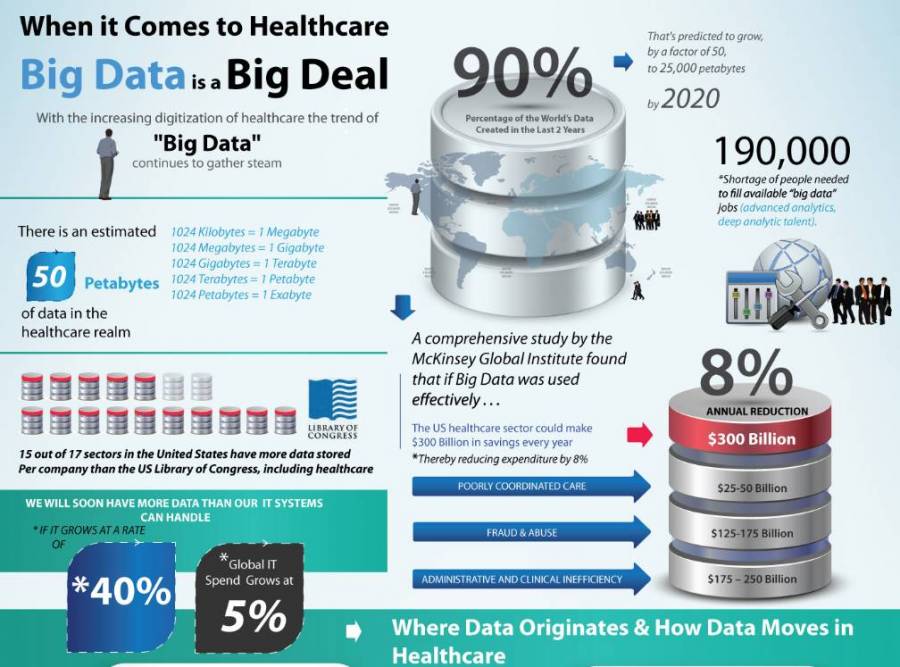
The research says that 56% of hospitals don’t have a strategy on how to govern data and conduct analytics. Healthcare still lacks the entire structured database, data from which can be easily read, interpreted, and applied to future treatment.

When we’re facing one of the most challenging pandemics of coronavirus, the new approaches to healthcare, data analysis, and predictive analytics are must-have tools to apply.

Data is our Life

Why is data our life? The doctors are the same humans as we, and the possibility of a mistake in prescribing or specifying the dose of medication is not uncommon today. One wrong prescription can become a threat, not only to the complete recovery. But to the life of a patient and all humanity, in general, the same rules apply. Mistakes across the healthcare field increase both insurance and hospital costs.

Data in healthcare is what we all are dependent on. Data analytics in healthcare, in its turn, is crucial for healthcare. As it is a decisive factor when defining the methods of treatment and prescribing medications. It can give us an entire picture of each patient’s condition, precision-driven methods of care.

Healthcare

Graphic source: bhmpc dot com

The real-time medical data analysis gives the possibility:

  • to keep and process data in real-time to be able to make a clinical decision at the right time.
  • to decrease costs on unnecessary medicaments, avoid duplications. It also allows searching for less costly alternatives
  • to minimize the risk of treatment of unaddressed and worsening conditions that need the clinician’s attention. So that problems may be addressed before the patient is readmitted.
  • to cut patient wait-times through measuring and scheduling the time of each procedure.
  • to ensure a more personalized patient’s treatment and increase the overall satisfaction.

Of course, hospitals can’t cut their costs or provide services to fewer patients. Instead, they can optimize their use of the assets and try to do more while spending less time and money resources on it. It might sound strange, but with Artificial Intelligence and its technologies of data analysis in health care and predictive analytics, it is more than possible.

How Do AI and Big Data Transform Healthcare?

The integration of Artificial Intelligence models in health care is one of the biggest focuses in the world in recent years. 2020 has just started, but already two leaders on the market announced their plans on budget allocation in AI in the healthcare industry:

  • Microsoft is going to invest $40 million in Artificial Intelligence technology for the healthcare sector for the next five years.
  • Bayer agreed on cooperation with Exscientia in drug manufacturing based on AI technologies.

That leaves us with no doubts that AI technologies are fundamentally changing the global health care system, making it possible to radically redesign the medical diagnosis system, develop new approaches to medical treatment. They are generally to improve the quality of healthcare services while reducing costs for medical clinics.

What does real-time data analysis in health care offered by AI enable:

  • Planning medical care for individuals and population groups, including prognostic management of disease progression.
  • Identification and involving the most effective practical measures to decrease the number of repeated hospitalizations.
  • Minimize the risk of blood poisoning and renal failure
  • Optimized management of treatment outcomes and drug costs.
  • Defining new methods of improving the quality of patient care.

Among the benefits of big data in healthcare is the possibility to improve the quality of clinical services, track financial performance. And detect fraud while freeing doctors from routine work and leave the opportunity to do what they have to do – help people to maintain their health in good condition And react to unforeseen health issues in time.

Words of Worth

While static data can just describe the health conditions of the patients and store necessary information about medicine. Data analysis can help answer more critical questions: ‘why is it happening so?’, ‘what can we do with it?’ and ‘how can we avoid this.’

The number of investments in Artificial Intelligence in healthcare, programs, researches. How the world adopts newly coming technologies to the industries, including healthcare. That means that the answers to the question will be found very soon.

Image Credit: cottonbro; pexels

The post Why Real-Time Data Analysis is Crucial for Healthcare appeared first on ReadWrite.

WP to LinkedIn Auto Publish Powered By : XYZScripts.com